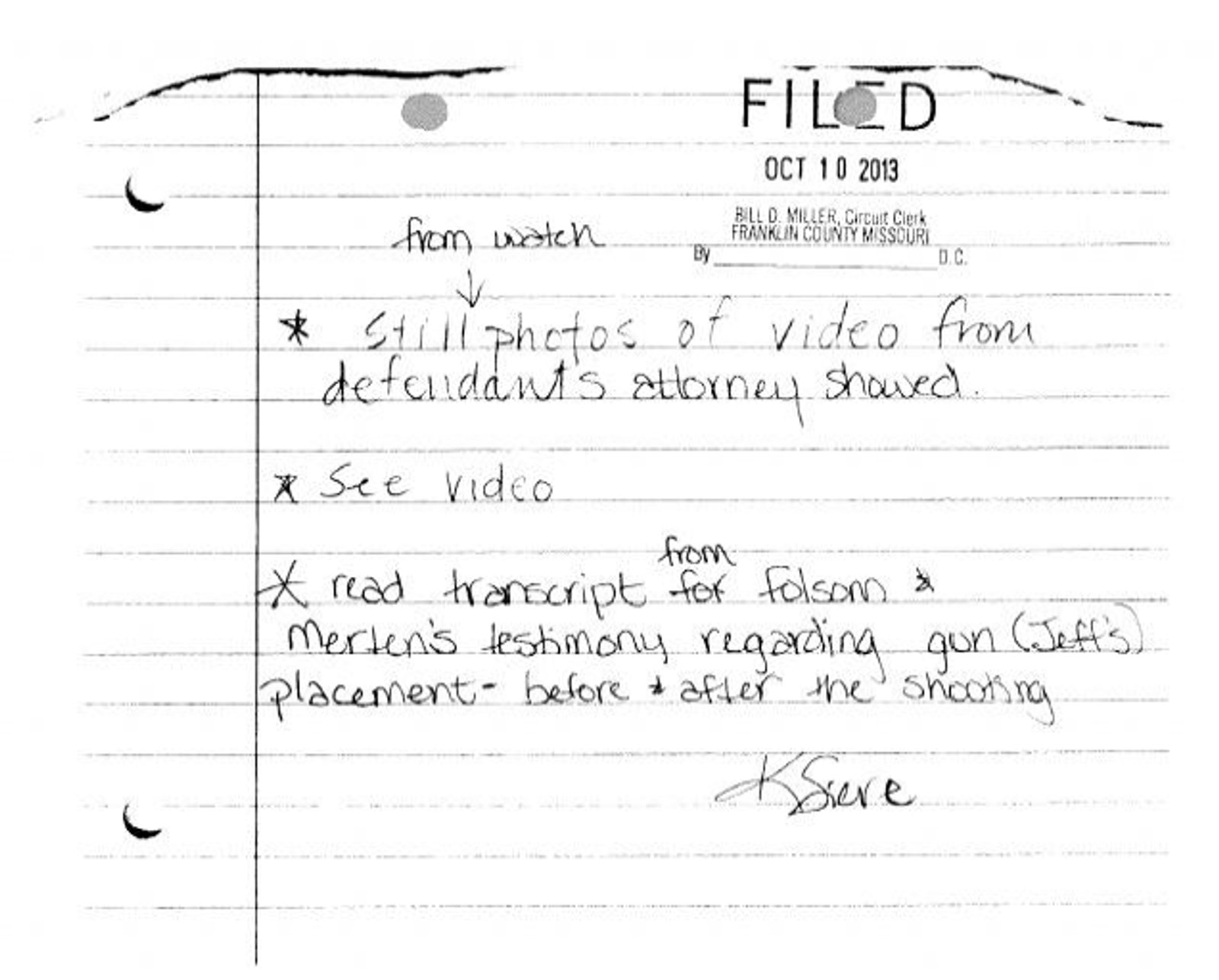

On the morning of October 10, 2013, a juror in Union, Missouri wrote a note on a sheet of notebook paper and handed it to the bailiff. The Franklin County circuit clerk stamped it and put it in the file, where it has been ever since.
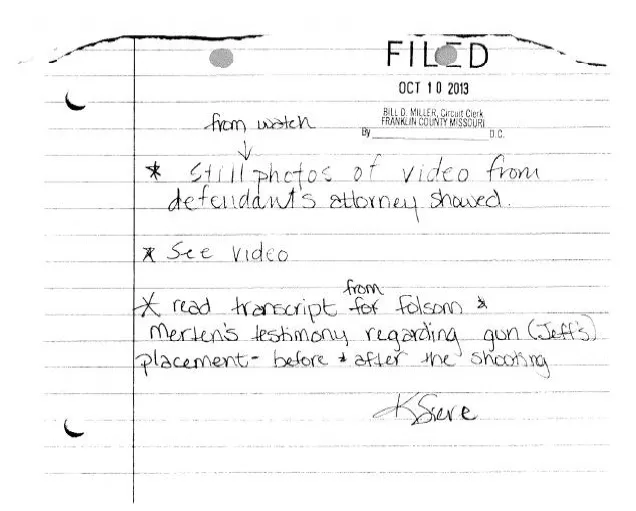
It reads: "Still photos of video from defendant's attorney showed (from watch). See video. Read transcript from Folsom & Mertens testimony regarding gun (Jeff's) placement — before & after the shooting." It is signed by juror number four, Krista Sieve.
The jury had been out a little over forty minutes. They had found, on their own, the question the case turned on: where was Jeffrey Weinhaus's pistol when Sergeant Henry Folsom shot him four times at a gas station on Highway K near St. Clair. Two state troopers had given them two different answers.
Folsom testified he watched Weinhaus draw. "I watched the weapon come all the way up out of the holster, except for about the last inch of the weapon," he said, and fired two rounds into the chest and one into the head. When Weinhaus fell, Folsom said, "he had the weapon in his right hand." He rolled him over, took the pistol from under him and "jammed it down into the holster."
Corporal Scott Mertens, Folsom's partner of five or six years, stood beside him and fired twice himself. Asked whether he ever saw the handgun come free of the holster, Mertens answered: "To my knowledge it never came free of the holster." He never saw the butt or the grip. When Folsom threw the holster clear, Mertens said, "the gun was inside the holster."
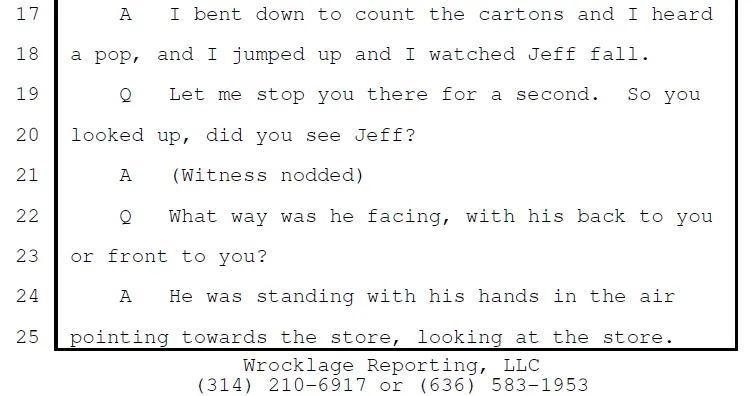
Two civilians saw empty hands. Station clerk Heather Clark heard a pop, looked up, and saw Weinhaus falling with both hands in the air. Marty Leach, repairing a gutter on the building, saw him falling forward, hands nowhere near a gun.
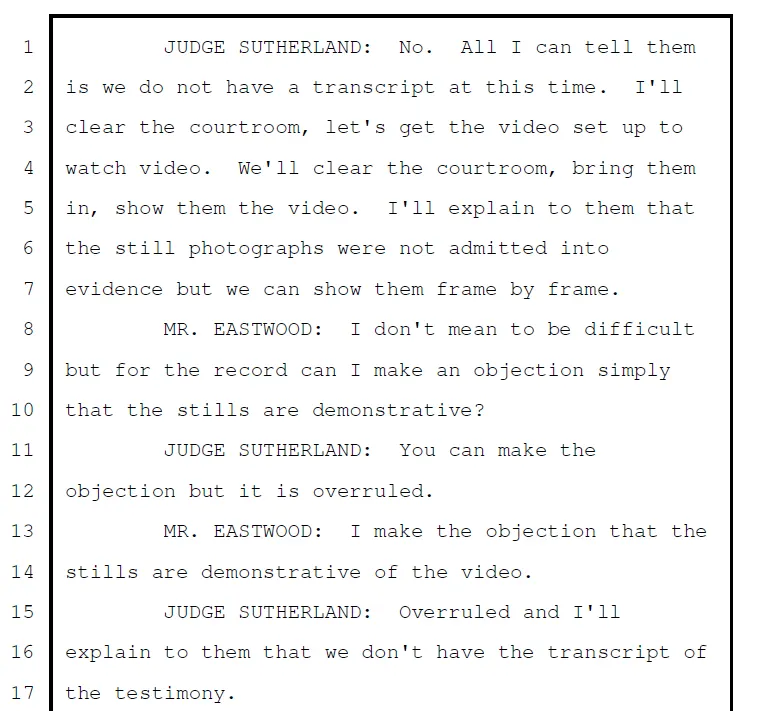
The jury asked to have the troopers' testimony read back. Judge Keith Sutherland told them no transcript existed yet. The still frames the defense had used — 29 of them, pulled from the video one frame at a time — had never been offered into evidence, so he could not hand those over either. He offered to step through the recording. They watched it twice at normal speed and went back to the jury room. Eastwood objected and was overruled.
They convicted Weinhaus on the counts naming Folsom and acquitted him on the identical counts naming Mertens. He is serving thirty years.
Thirteen years later a copy of that recording is on the internet, and anyone with a pause button can do what the jury asked to do.
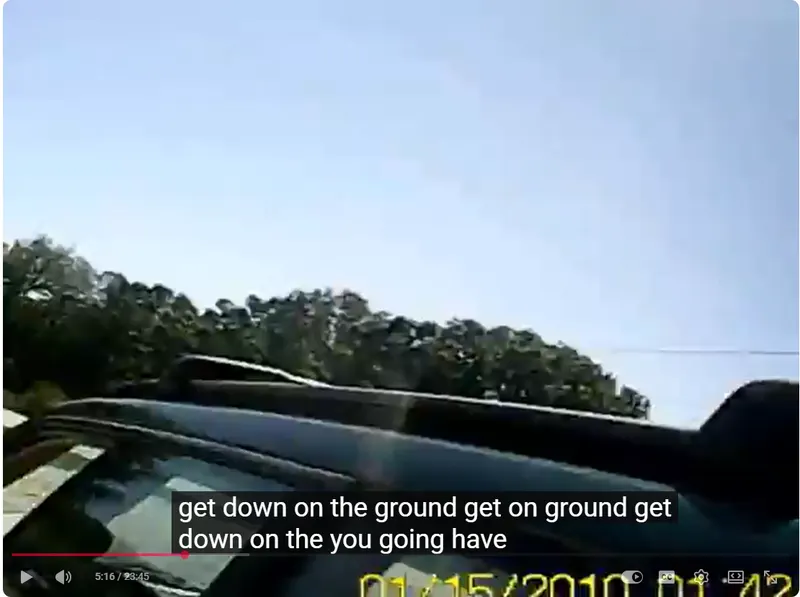
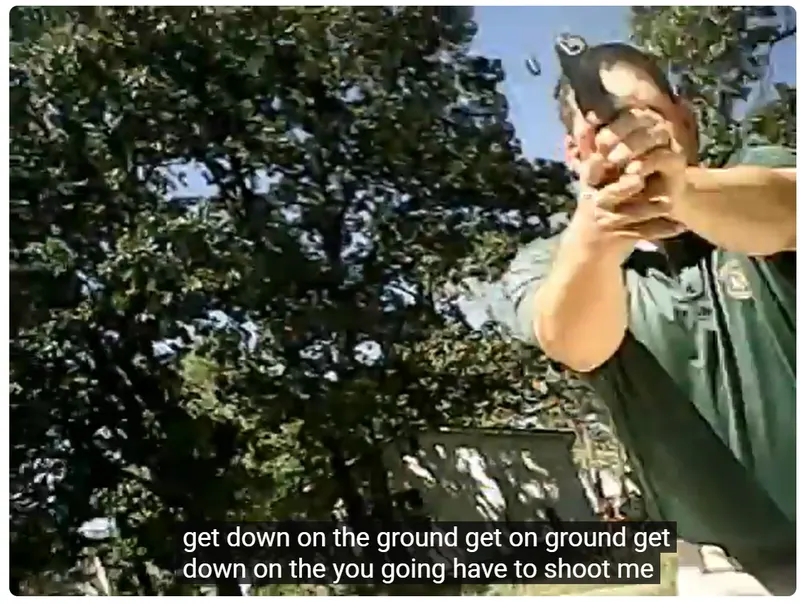
Stepped frame by frame, it shows Weinhaus's left wrist … the camera was a watch on that wrist … raised above the roof of his car while an officer shouts at him to get on the ground.
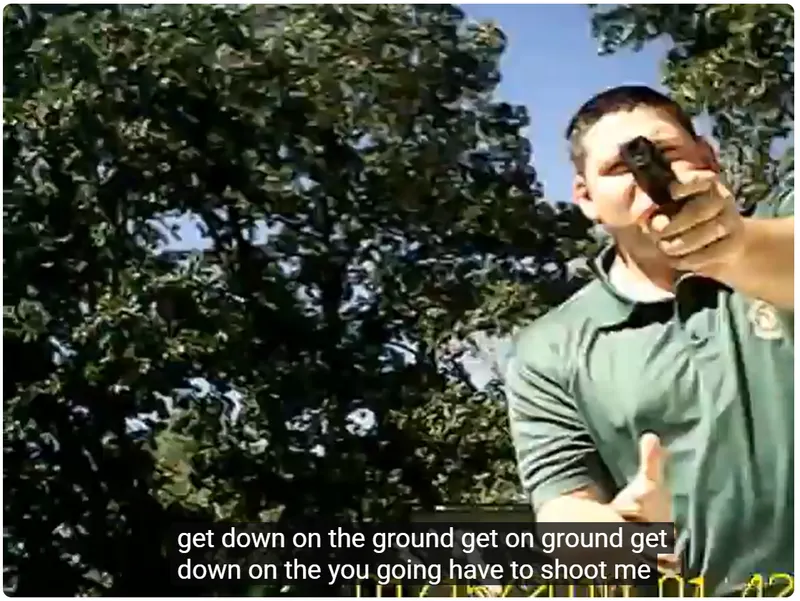
About a second later Folsom is squared on him with the pistol in his left hand, then both hands, then a spent casing in the air. Two seconds after the raised hand, the watch is lying in the gravel. It does not show Weinhaus's right hand.
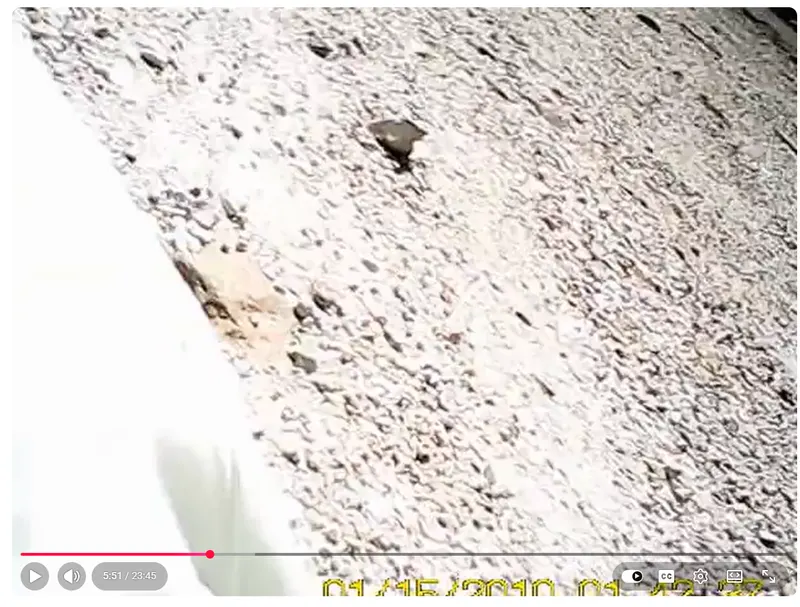
Half a minute on, the camera lying beside him shows a flat object on the gravel out of arm's reach, consistent in size and shape with the Army flap holster Weinhaus was wearing, face down with the muzzle end pointed away. Nothing at that angle shows whether the pistol is inside it.
About two and a half minutes after the shooting, Mertens is heard on the radio telling the Patrol that Weinhaus is not J4. At trial, asked what J4 meant, Mertens answered: "Death, fatal, dead."
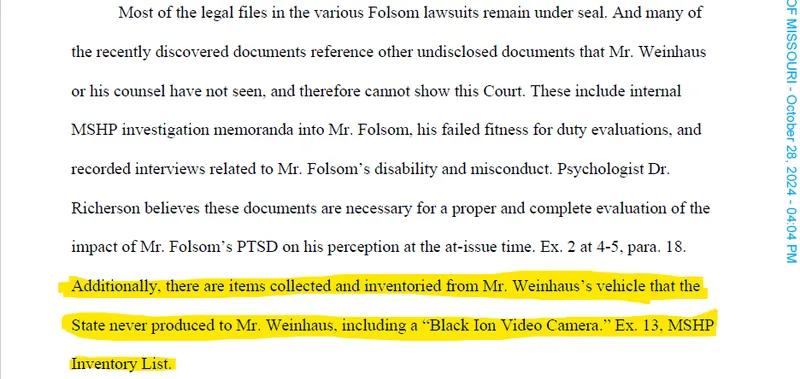
There was also a second camera. When the Highway Patrol searched Weinhaus's Subaru, it found a black Ion video camera. The Patrol's forensic unit examined it, but the jury never heard what, if anything, it recorded. Weinhaus says it was pointed out the back window. No recording from it has ever surfaced. Eastwood never brought it up in court. Weinhaus's 2024 filing says the camera was never turned over to him.
The jury asked to see still photos from the watch video. The judge refused because they were never entered into evidence. No court has examined the stills or the Ion camera, because no court has held an evidentiary hearing since his 2013 trial.
The exhibits the jury asked to see and the black Ion camera are still in the Troop C Property Room.