
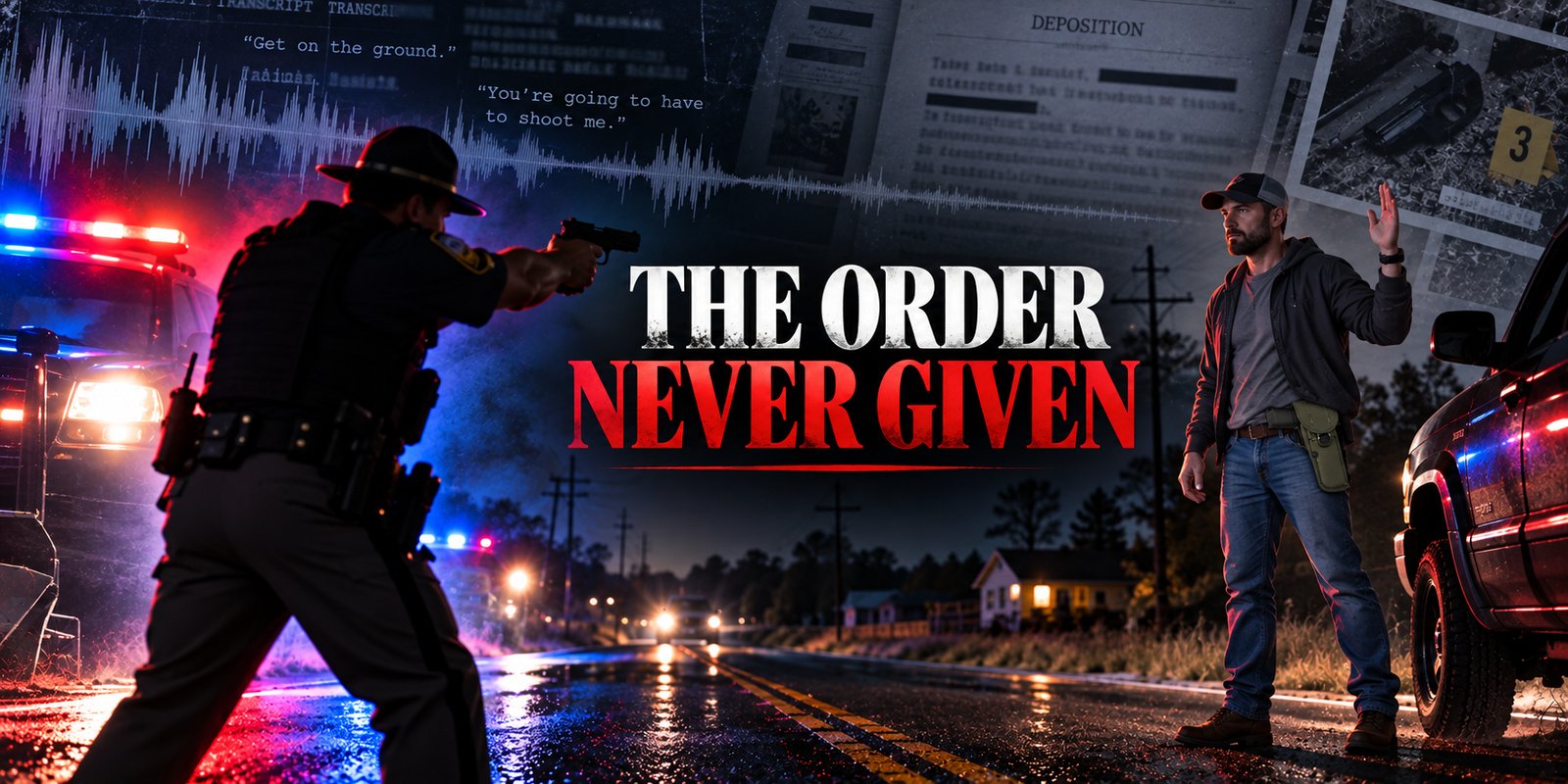

Two weeks ago, I asked readers what Henry Folsom was willing to say under oath. His own actions were on the line, as well as another man's freedom. In this article we look at his telling of the events of September 2012.
Former trooper Henry Folsom has told the story of September 11, 2012 at least seven times. A written report. A recorded interview the next morning. A deposition in June 2013. Trial that October. A sworn discrimination charge in 2015. A lawsuit in 2016. A deposition in 2022.
Jeff Weinhaus was wearing a watch camera, and his wife had him on speakerphone. Folsom’s versions disagree with each other, and the tape questions much of his testimony.
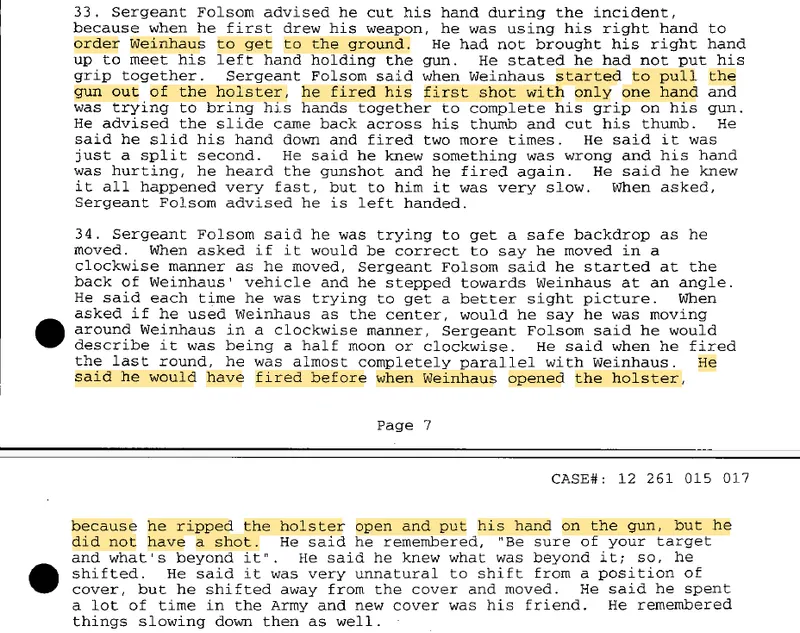
Folsom's report says he told Weinhaus to get on the ground, then he "ordered Weinhaus to get his hand off the gun." Only then did Weinhaus say, "You are going to have to shoot me." while Folsom trained his weapon on him. He told the Patrol's investigator the same thing the next morning. In June 2013 the defense lawyer handed him that report under oath. Accurate? "Yes, sir." Change anything? "No."
The order is not on the watch video. It is not on the speakerphone. It is not in the Patrol's own written narrative of the video. At the trial, the prosecution called the Patrol's chief firearms instructor. He confirmed that neither trooper mentioned anything about hands on the tape. The time from the first "get down on the ground" to the first shot is approximately 3.85 seconds, and we account for every word in that gap. Get your hands off the gun is never heard.

At trial, four months after saying the report was right, when asked why he didn’t tell Weinhaus get your hands off the gun. Folsom said, "I didn't have time."
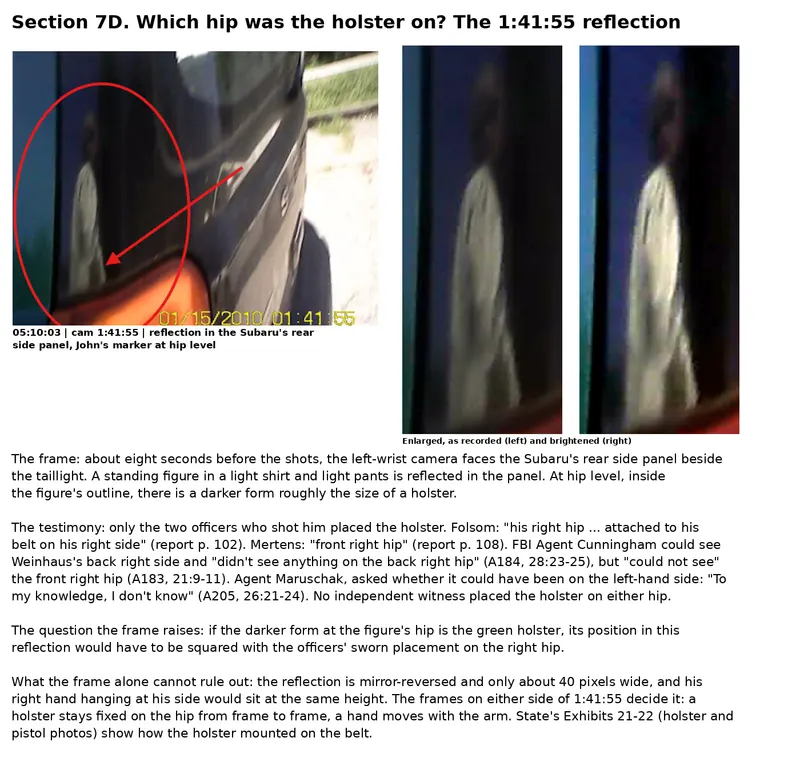
Then there's the question of if Weinhaus actually drew. In the deposition and at trial, Folsom said his own gun was coming out of the holster as he asked, "Jeff, what are you doing with that gun?" Weinhaus answered, "What are you doing with your gun?" Weinhaus was talking to a man who was drawing on him. Folsom said the holster was on Weinhaus' right side; the video shows it was his left.
In 2015, swearing out a complaint against the Patrol, Folsom reversed who drew first: "he attempted to draw a pistol. I drew in response and fired."
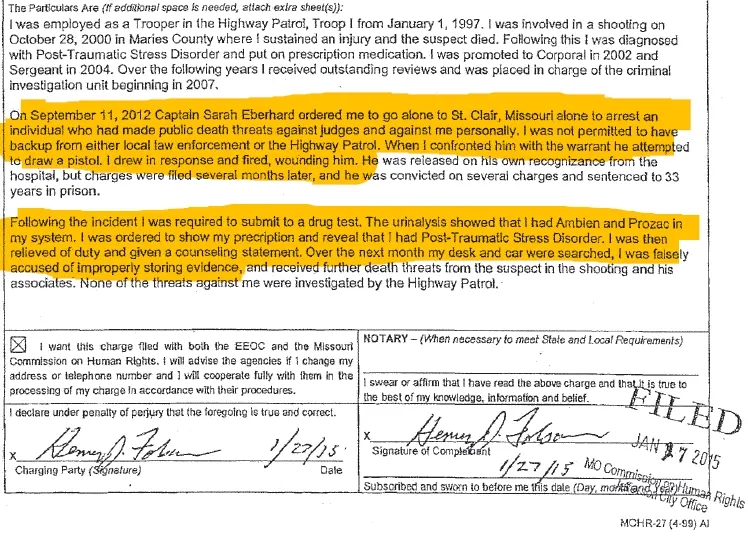
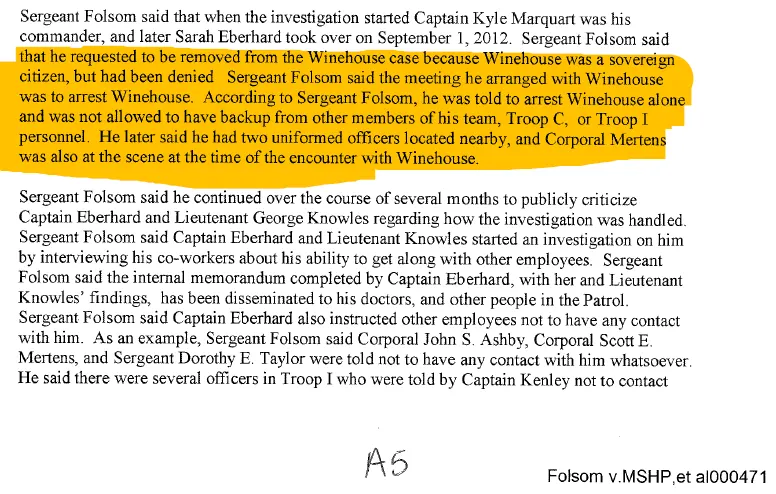
The sworn complaint says Captain Sarah Eberhard "ordered me to go alone." It also states that Folsom "was not permitted to have backup." His report lists two FBI agents, his partner and two marked patrol cars. In 2014, a Patrol investigator interviewed him. He first claimed that Eberhard sent him alone. Then, he said two uniformed officers were nearby and his partner was at the scene. The investigator wrote both versions down.
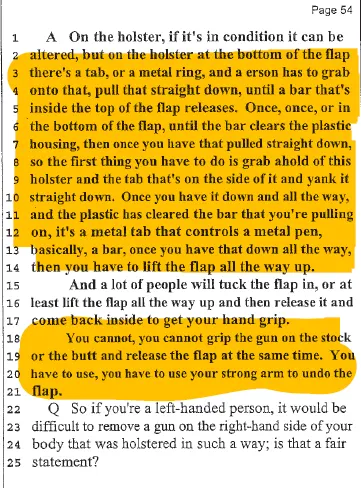
Folsom provides a detailed account of the draw. He testified the military flap holster takes two separate motions to open.
Folsom said that after Weinhaus said "you're going to have to shoot me," he used his left hand to help. The pistol rose five inches from the holster before Folsom fired.
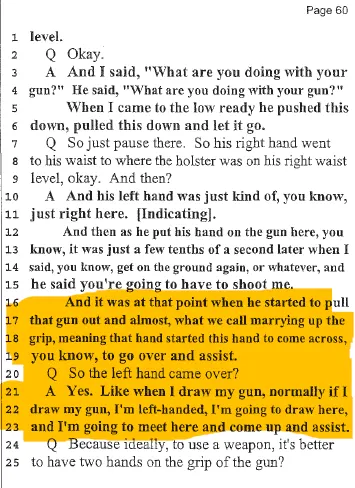
On the tape, that sentence ends about a third of a second before the first shot. His partner, Cpl. Scott Mertens, testified: "To my knowledge it never came free of the holster." The video never shows this movement of the left hand.
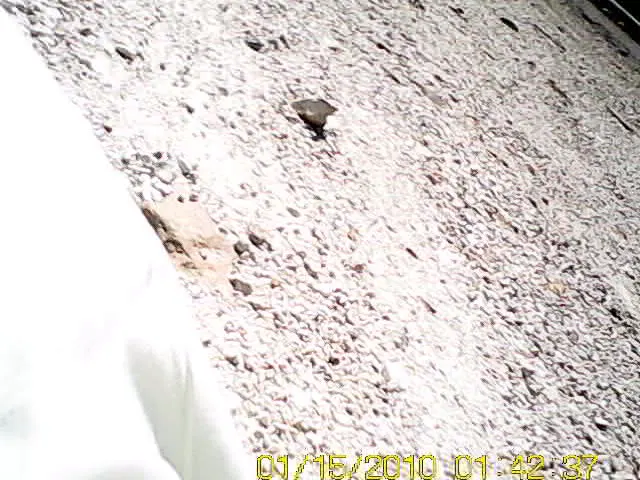
Folsom said he "double tapped" and fired a third round "as fast as I could." Both recordings show one shot, a two-thirds-of-a-second pause, then the rest. He said he jammed the pistol back in the holster before he threw it. The watch camera footage appears to confirm that the pistol was secured in its holster barrel facing North.
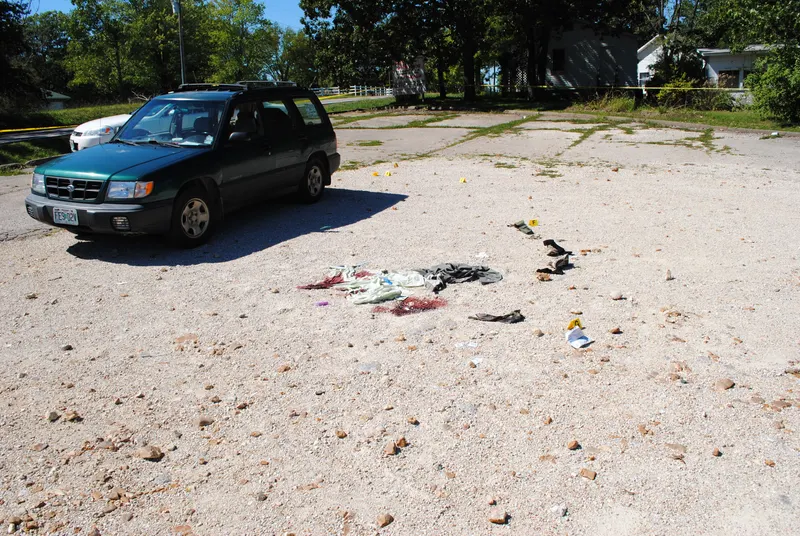
However, the Patrol’s own crime scene photograph shows the pistol partially withdrawn from an open holster and pointed in a different direction. This discrepancy raises additional questions about how and why the pistol’s position and orientation changed between the watch camera footage and the crime scene photograph.
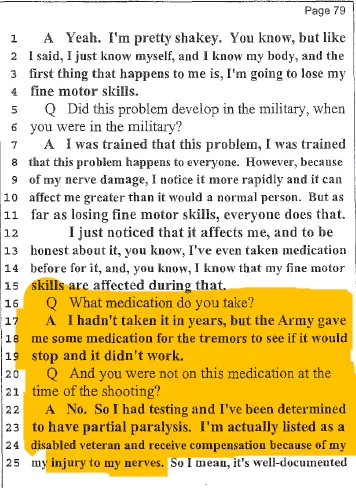
Now the June 2013 deposition again. Folsom was describing his hand tremors and said he had taken medication for them. The defense lawyer asked what medication he takes. Folsom named a tremor prescription the Army gave him years earlier. Was he on it the day of the shooting? "No." That was the only drug he mentioned.
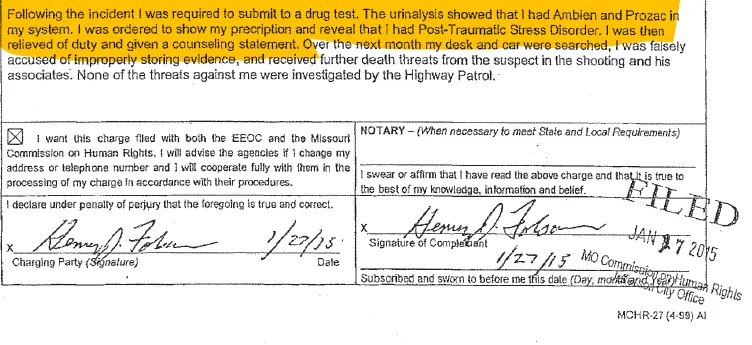
His 2015 sworn complaint states he was prescribed medication for PTSD after killing a man in 2000. He noted that a drug screen after shooting Weinhaus "showed that I had Ambien and Prozac in my system." On November 14, 2012, he was ordered to take a fitness-for-duty evaluation, "which I failed." Eberhard told the Patrol's investigator Folsom told her about the PTSD days after the shooting. A month after the shooting, an inquiry into his unit found employees stating Folsom "departs from the truth."
Two minutes after the shooting, the watch caught him on the phone to his lieutenant: "I shot him right here. He's dead." Asked about that under oath, Folsom said the recorder didn't get all his words. Then he said this: "I mean, I just didn’t think he'd do it.”
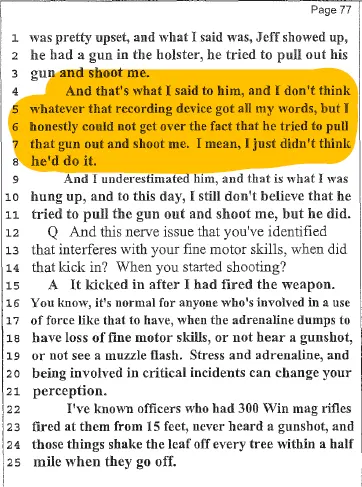
The man who pulled the trigger didn't believe Weinhaus would actually do it. If the shooter himself had doubts, why didn't the jury have reasonable doubt?